Interviews
-
Chto Delat: ‘Before you can recognise the light, you have to recognise the darkness’
Dmitry Vilensky and Olga Egorova of the Russian collective Chto Delat talk about their latest exhibition, On the Possibility of Light, at KOW in Berlin, and how they hope to foster debate through their engagement with political struggles
-
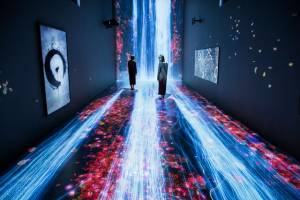
Toshiyuki Inoko: ‘We are exploring the ways in which the relationships between people can be changed through art’
The founder of teamLab, an interdisciplinary group of ‘ultra-technologists’, explains how digital technology can expand art and remove the barriers between the work and the viewer
-
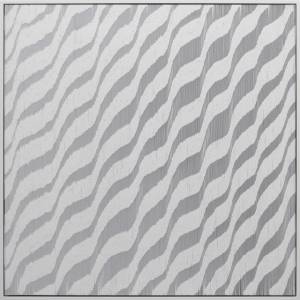
Tara Donovan: ‘I’m interested in exploring the moment where the conditional relationship of part to whole breaks down’
The artist explains that, although her latest work, Compositions (Cards), may seem very different from her earlier, large-scale floor-based installations, it springs from the same desire to play with perceptual capacities
-
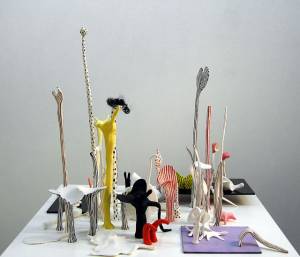
Vera Möller: ‘My father thought going to art school was like wanting to become a communist’
The German-born artist explains why she first studied biology rather than art, how her scientific background informs her work, her love of the Great Barrier Reef, and why she is moving away from painting painstaking details of imaginary species
-
Thomas Hirschhorn: ‘The Gramsci Monument, like all monuments, is made for eternity’
The artist talks about his commitment to art in public spaces, describes how the Gramsci Monument in New York evolved with the help of local people, and explains his belief in the ‘unshared authorship’ of art
-
Laura Oldfield Ford: ‘I map ruptures, such as the London riots’
Oldfield Ford spends a lot of time walking through the capital’s streets and, from the fanzine she began in 2005 to her current exhibition, Alpha/Isis/Eden, her work is all about change, the rich pushing out the poor. The artist’s job,…
-
Mai-Thu Perret: ‘I had this urge to portray these female warriors’
The multi-disciplinary artist talks about her continuing fictional narrative The Crystal Frontier, her obsession with an all-female Kurdish militia fighting in Syria, and early-20th-century feminist fiction
-
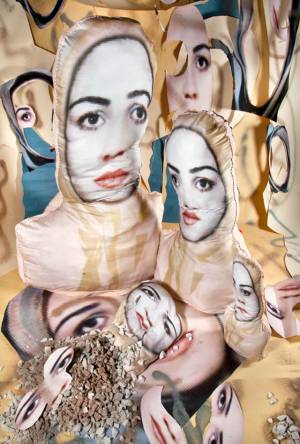
Linda Stupart: ‘I’m interested in thinking about a world without men’
The writer, sculptor and performance artist talks about the power of crystals, witchcraft and using sci-fi as a tool to write queer time and imagine queer futures
-
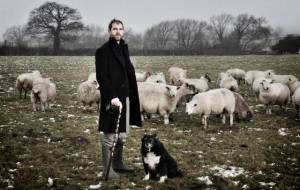
David Brian Smith: ‘My cause is to fight for the plight of the English countryside’
The painter’s pop-coloured vision of the English countryside belies a sad truth, but as Smith demonstrates, bitterness can be channelled into something meaningful
-
Sheida Soleimani: ‘Does someone really want to buy an image of an executed woman and hang it in their home?’
Surrounded by her neon memorials to women killed in Iran, Soleimani discusses the state-sanctioned misogyny and human rights abuses there, and how she is trying to make people in the west aware of what is going on
-
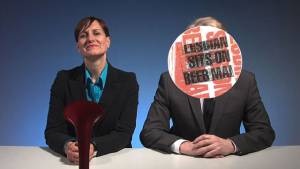
Ed Webb-Ingall: ‘I am a product of lesbian history and a child of section 28’
The video-maker talks about working with communities, his current work, We Have Rather Been Invaded, about section 28, which prohibited schools from promoting homosexuality – and the difference between being a parasite and a Trojan horse
-
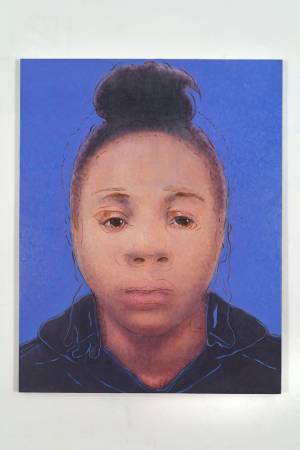
Titus Kaphar: ‘My subconscious mind had created a fiction that masqueraded as a memory’
For his current exhibition at Jack Shainman Gallery in New York, Titus Kaphar looks to historical portraiture, and imagery from the criminal justice system in his examination of how history is recorded
-
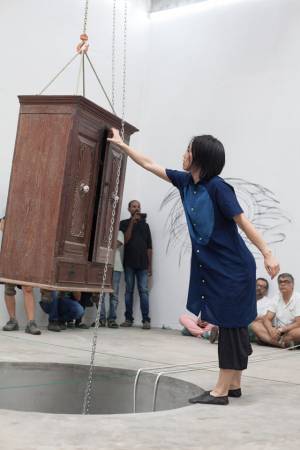
Aki Sasamoto: ‘I enjoy how much I can push meaning with the wrong answers’
New York-based performance artist Aki Sasamoto has a tendency to speak entirely in metaphor, sit in abstraction for hours, and mark her responses with a small question at the end: No? She asks, smiling. As though everything, at all times,…
-
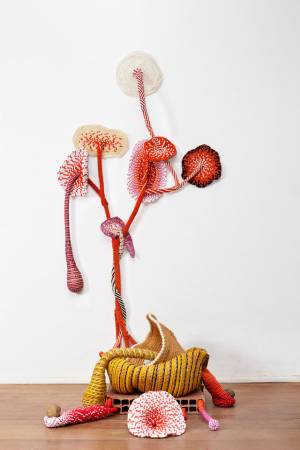
Maria Nepomuceno: ‘I want to create a place where people can be suspended in time’
The Brazilian artist talks about her fascination with hammocks, her novel way of amalgamating painting and sculpture, and the power of ancestral connections
-
Hedy Ritterman: ‘My motivation was to confront mortality, identity and loss, with memory’
Ritterman talks about how her current exhibition, which includes more than 700 of her late husband’s possessions, helped her come to terms with his death, and how she has conflated traditional Jewish mourning with her own personal version
-
Susannah Stark: ‘I like to create something that bears the trace of multiple worlds’
The artists talks about cultural memories, Spolia, swamps and Icelandic necropants
-
Hugo McCloud: ‘I respect the beauty in the things that are overlooked’
The emerging artist Hugo McCloud, whose layered abstract paintings concentrate on process and material, talks about his second solo show in New York
-
Caragh Thuring: ‘It’s a sort of standoff – how am I going to deal with this?’
The Brussels-born artist discusses reconstructing old paintings as tapestries to create new work, why she uses figures from adverts, and her love of bricks
-
Mette Edvardsen: ‘If forgetting is important, then so is remembering’
The dancer, choreographer and performer talks about memorising books and then retelling them, and exploring the possibilities and limits of language
-
Fabienne Verdier: ‘I am an intrepid woman, a bit of a rebel maybe’
Verdier explains her unique method of vertical painting, using a handmade brush with a large reserve of paint, capable of expressing her seemingly unstoppable flow of energy
-
Sophie Jung: ‘I don’t trust language’
The performance artist talks about Chinese encyclopaedias, the Austrian feminist playwright Elfriede Jelinek, and her family of actors
-
Karen Russo: ‘I’ve always liked the idea of making films that were somehow outside of time’
The artist talks about her two most recent films, Haus Atlantis and TET-Stadt, which centre on the buildings and ideas of the German expressionist architect and Nazi sympathiser Bernhard Hoetger
-
David Kohn: ‘In trying to broaden what architecture could be, it feels like there is room to breathe’
From a house extension modelled on a fox, to a new quad for an Oxford college, to a hotel in the air, Kohn has tackled them all, with – as he explains – a little help from some very strong-minded…
-
Emma Elliott: ‘Being human is the most important thing. Just being human and not fighting’
The Passion For Freedom ambassador talks about her current project, which brings together the stigmata of the crucifixion and the Holocaust, seeking to create a dialogue of unity and reconciliation within a fractured society