Interviews
-
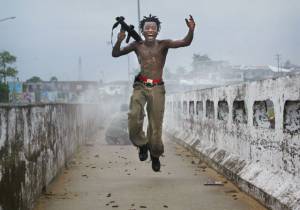
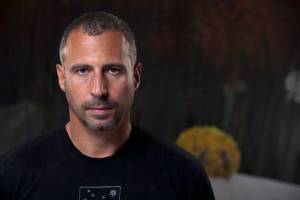
Greg Campbell: ‘I’d like people to get to know my friend a little through this film’
Greg Campbell talks about his film Hondros, which premiered at the year’s Tribeca Film Festival, and about his long friendship with its subject, the photojournalist Chris Hondros, who was shot and killed in Libya in 2011
-
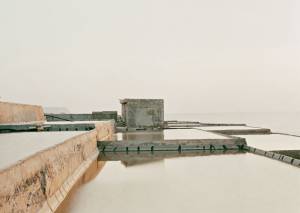
Elger Esser: ‘Beauty is not important; it’s a logical result in my opinion’
After his recent solo exhibition at Parasol Unit in London, Elger Esser talks about the relationship between Lebanon and Syria, having more in common with JMW Turner than Caspar David Friedrich, and how we are programmed to view landscapes as…
-
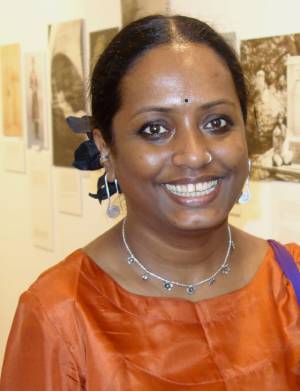
Mithu Sen: ‘I constantly change my mediums so the market will not be able to trap me’
Indian artist Mithu Sen has a quicksilver practice that is difficult to categorise or maintain as a singular narrative. This, she says, is intentional – it is her effort to defy the demands of the market
-
Georgia Horgan: ‘Confident, working women were a threat to the social order’
Georgia Horgan talks about her recent exhibition, All Whores are Jacobites, and how she became intrigued by the lives of three women whose lives were linked by themes of prostitution, textile work and protest
-
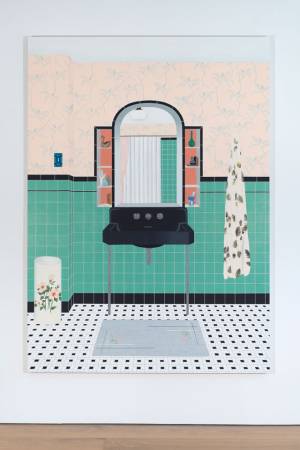
Becky Suss: ‘Putting domestic spaces into the gallery says something about what something is worth’
In her exhibition Homemaker at the Jack Shainman Gallery in New York, Philadelphia-based artist Becky Suss presents a group of paintings that reflect on interiors that include objects of personal significance
-
NS Harsha: Charming Journey
Indian artist NS Harsha explains some of the works on show at this retrospective, and why, despite once working for a technology company, he prefers to stick to painting
-
Frances Stark: ‘I am desperately trying to connect outside of the art world’
Frances Stark, the Los Angeles-based interdisciplinary artist and writer, talks about her first opera, an adaptation of Mozart’s Magic Flute,and her desire to cross boundaries
-
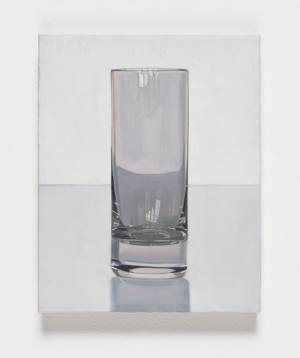
Peter Dreher: ‘In my pictures I underline the act of seeing’
German artist Peter Dreher recounts the trauma of childhood under the Nazi regime, his autonomy from the social ferment of the 60s, and confronting all the problems of art history through the sustained depiction of a single ordinary object
-
Oliver Griffin: ‘The very act of photography makes something interesting’
Oliver Griffin talks about drinking White Russians, his BMX bike, which he has named Susan, taking pictures of tyre marks, and why there is no such thing as a boring photograph
-
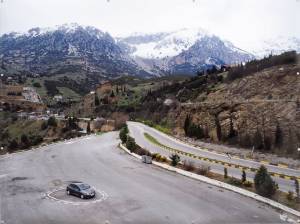
James Bridle: ‘There is a huge demand to humanise the technological view of the world’
James Bridle talks about his current show at the Nome Gallery, Berlin, which centres around the self-driving car, technological agency and the relationship of humans to machines, and what we can learn from them
-
Eddie Martinez: ‘I just want people to interpret the work how they want’
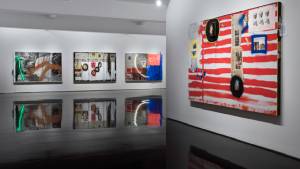
Eddie Martinez talks about his latest show, Cowboy Town, at Timothy Taylor Gallery in London, the influence of US politics on artists, and why he looks at his work on his phone all night
-
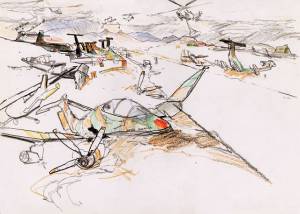
Linda Kitson: [Mine is] ‘a reactive sort of work – it’s a reaction to, rather than … a preconceived idea …’
Linda Kitson talks about the works in Drawings and Projects, her current exhibition at House of Illustration in London, curated by Quentin Blake, being a war artist during the Falklands crisis, her inspiration and influences, and her latest work using…
-
Ruth Maclennan: ‘I realised that global warming was happening, and asked, how do I as an artist respond to that’
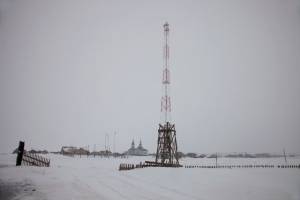
Visual artist Ruth Maclennan talks about what art can do in the face of climate change, her films of Arctic Russia and her latest film, shot in Scotland, From Time to Time at Sea
-
Secundino Hernández: ‘As a painter you have to have the courage to not be afraid of change’
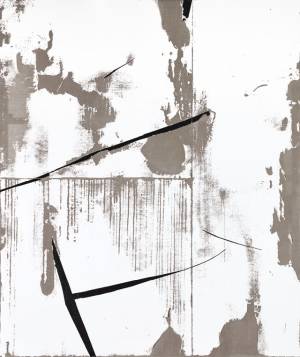
Secundino Hernández talks about his academic origins, the delicate equilibrium he seeks between accident and control, the quintessentially Spanish spirit of his painting, and his current exhibition, Paso, at Victoria Miro, London
-
Enrique Martínez Celaya: ‘The sense of past as memory always has force’
Enrique Martínez Celaya talks about his latest show, The Gypsy Camp, and his interest in nomadism and displacement, including his own experience of moving as a child from Cuba to Spain and then to the US, and explains his process…
-
Brook Andrew: ‘I was challenged to unwind the histories that were told to me because I didn’t believe them’
History, identity and race dominate the Australian artist Brook Andrew’s work, as he challenges stereotypical ideas, uncovering neglected and often conflicted histories, particularly relating to the Indigenous people of his own country
-
Alexey Titarenko: ‘I wanted to capture my inner perception of the world around me’
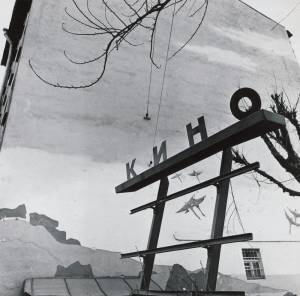
An exhibition at the Naiya Alexander Gallery in New York brings together Alexey Titarenko’s photographs from four cities taken over 30 years. Here, he talks about how life in the Soviet Union shaped his work, being jailed by the KGB,…
-
Deanna Petherbridge: ‘Drawing can be a million different things, but I think basically it’s a critical practice’
Using pen and ink as a metaphorical means of interrogating human interest, Deanna Petherbridge sees drawing as akin to writing, only perhaps more democratic
-
Caroline Walker: ‘Who we perceive to be the maker of an image affects how we consume it’
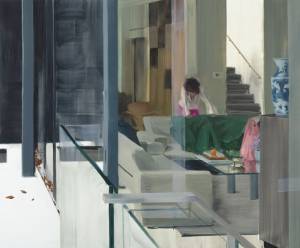
Caroline Walker’s quietly charged, often luxurious, spaces frame half-told narratives that complicate traditional ideas of the woman as subject. She talks about her process and how feminism is a nuanced concept
-
Helen Johnson: ‘I wanted to resist presenting some sort of unified image of history’
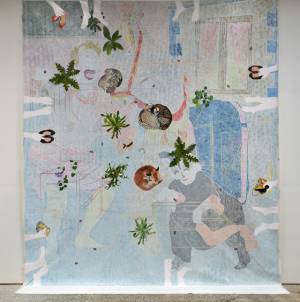
Australian artist Helen Johnson’s new exhibition at the ICA in London re-examines Britain’s colonial relationship with Australia. She talks about what that means to her and how her work reflects those ideas
-
Adrienne Elise Tarver: ‘I think about intrusion and the transition from viewer to voyeur’
Adrienne Elise Tarver talks about notions of voyeurism, and her interest in personal space and the power of suggestion
-
İ Ata Doğruel: ‘I want to destroy the limits between life and art’
Pushing his physical and mental boundaries to the limit, Doğruel seeks to make performances from his life and to use the medium of performance art as a tool to enhance his spirituality and find a broader sense of life
-
Serge Attukwei Clottey: ‘My body is part of my work’s mystery’
Using his body as an object, Ghanaian artist Serge Attukwei Clottey works with international media – as well as plastic yellow “gallons” (jerrycans) – to speak out about politics, religion, sex and tradition
-
Anna Freeman Bentley: ‘The work is successful when there’s a question over what it is you are looking at’
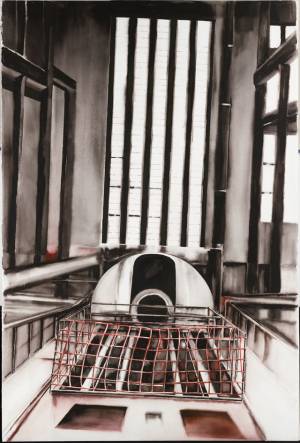
Anna Freeman Bentley’s paintings are visual and psychosocial mazes that tease layers of meaning from architectural spaces. She talks about her inspiration and the social tensions that lurk beneath the surface