Sara Barker – interview: ‘I tackle sculpture from the position of painting and vice versa’
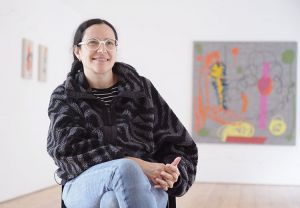
Glasgow-based Sara Barker talks about how the pandemic has affected her practice and her exhibition, undo the knot, currently on show at CAMPLE LINE
Sara Barker (b1980, Manchester, UK) uses a combination of materials – initially, rougher, cheaper ones, such as cardboard, and, later, more permanent metals such as steel, aluminium and brass, alongside glass and automotive paint – to create works that blur the boundaries between figuration and abstraction; sculpture, painting and drawing; and imagined and physical spaces. The tension in her pieces is felt viscerally by the viewer, who is drawn into a dialogue, already taking place between the works themselves. Heavily influenced by literature, poetry and language, Barker calls for human interaction with her creations.
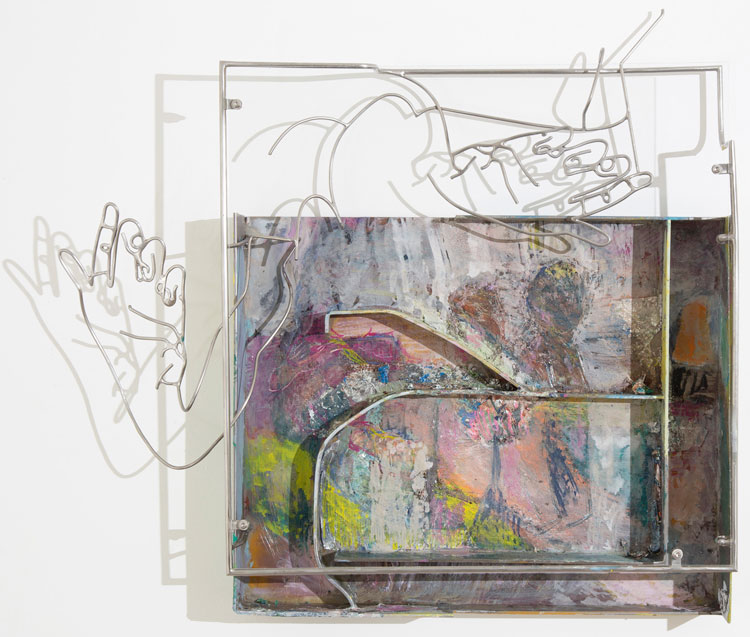
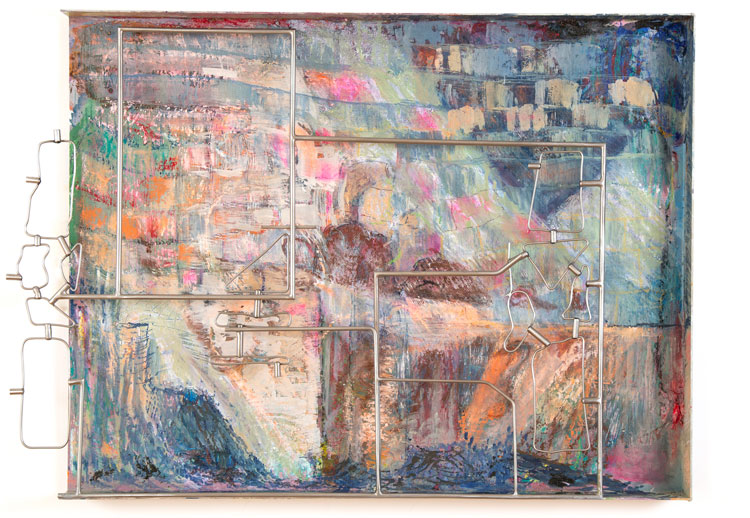
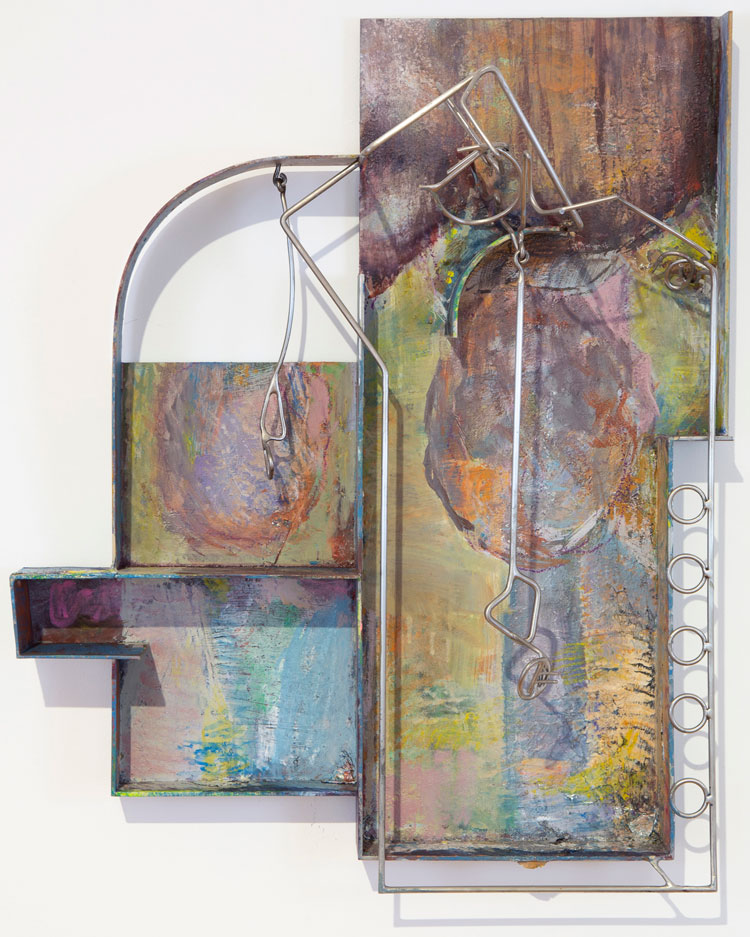
Sara Barker. JOINT, 2020. Stainless steel tray, stainless steel rod, automotive paint, oil paint and stick, varnish, tinfoil perspex, 60 x 49 x 9 cm. Photo: Mike Bolam.
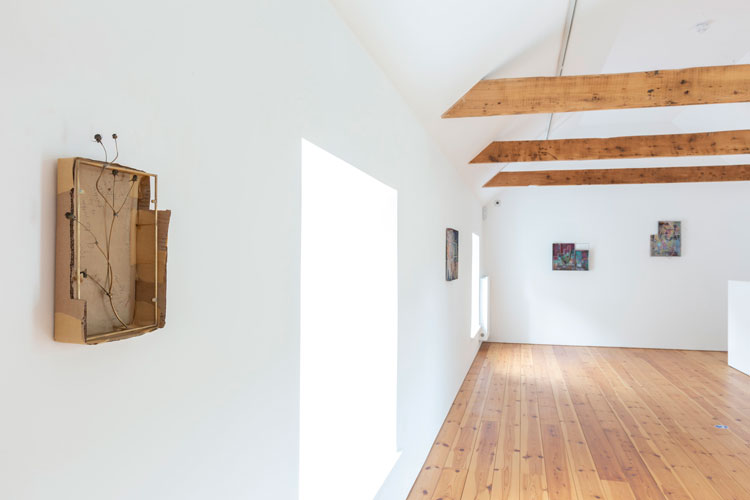
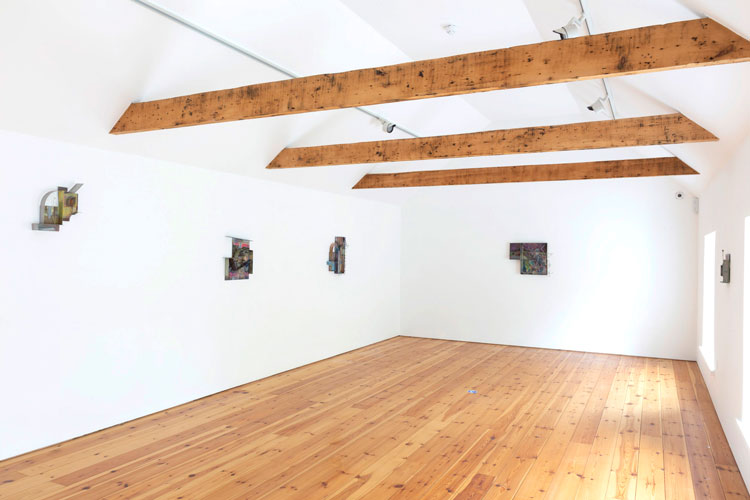
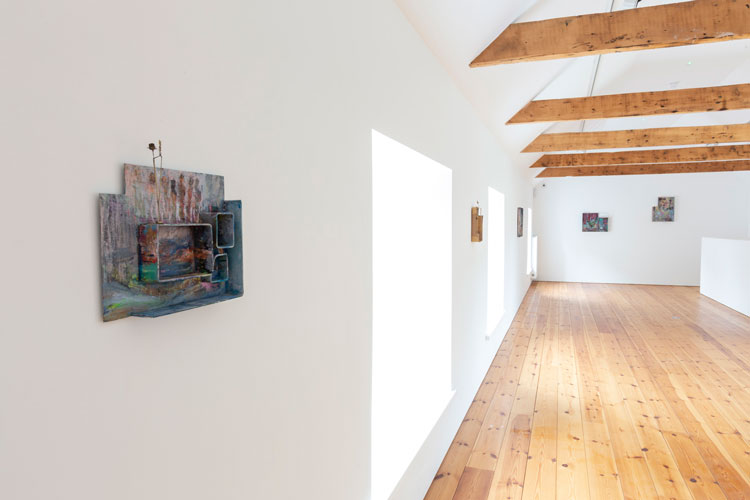
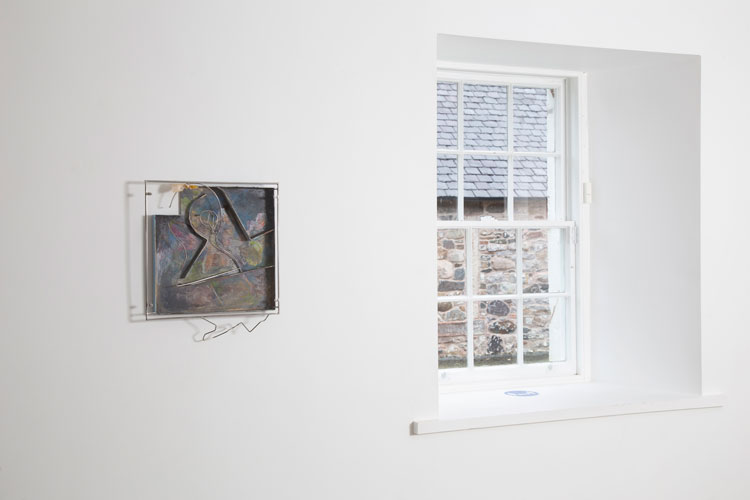
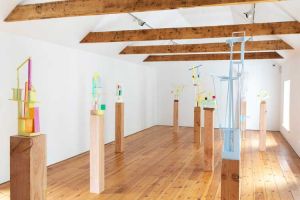
Her exhibition undo the knot, on show at CAMPLE LINE, includes, for the first time, what Barker describes as “exploratory works” – her initial, rougher “sketches” – which are not yet fully resolved, leaving open questions. Part of her motivation to include these works was the change in her approach to her practice, brought about by the first lockdown, when she became incredibly aware of a sense of having too much, endless time, yet simultaneously of none of it being available. Working from home, instead of her studio, she sought to bring her full daily experience into her work – all of the mundane and profound moments of life.
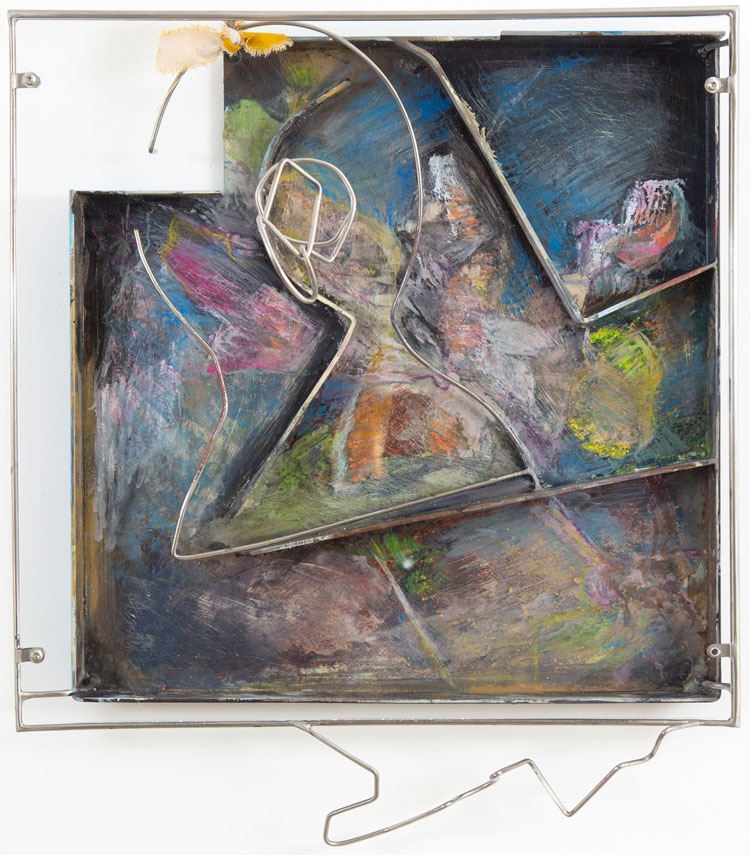
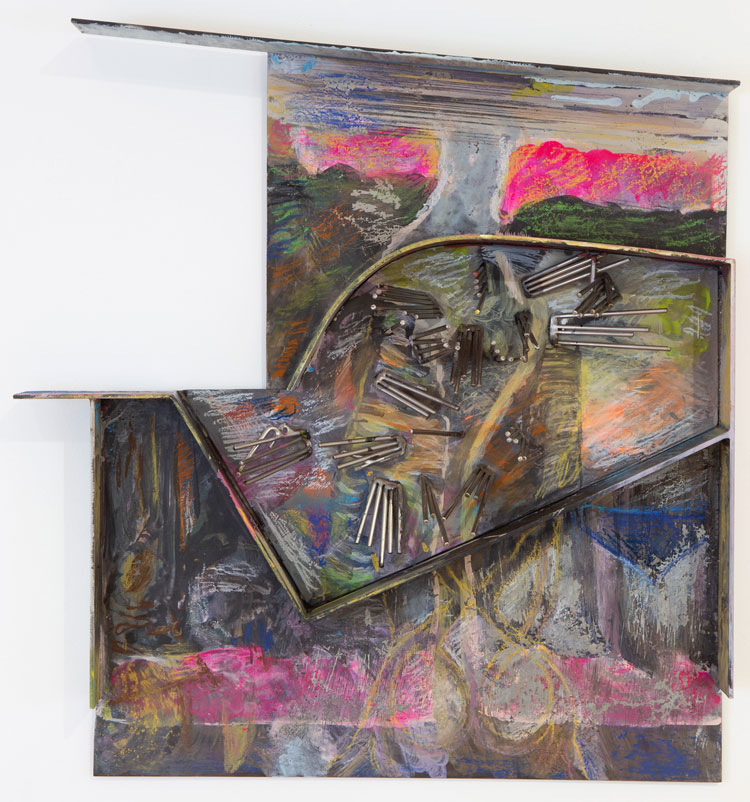
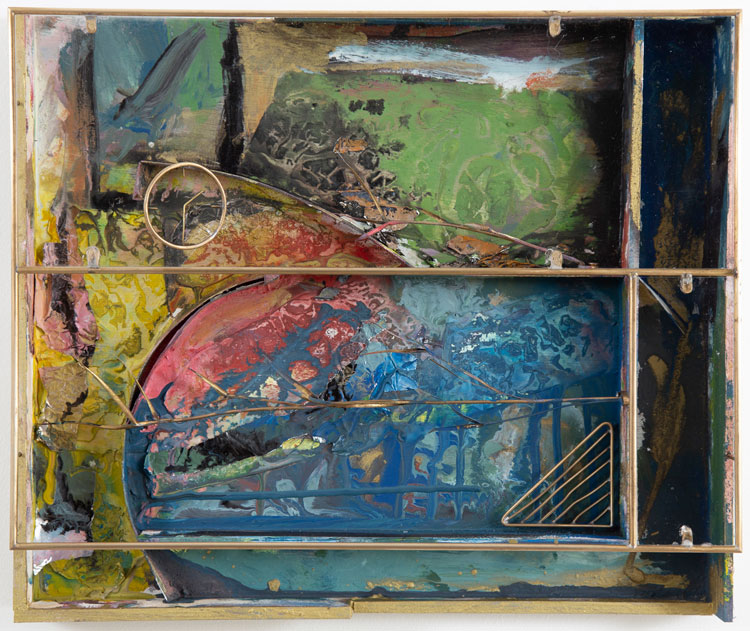
Sara Barker. PULL, 2020. Stainless steel tray, stainless steel rod, automotive paint, oil paint, rag, perspex, 43 x 50 x 16 cm . Photo: Mike Bolam.
Studio International spoke to Barker via Zoom about how lockdown altered her practice, the role of tension and fragmentation in her work, and how the building at CAMPLE LINE became a work in the exhibition in its own right.
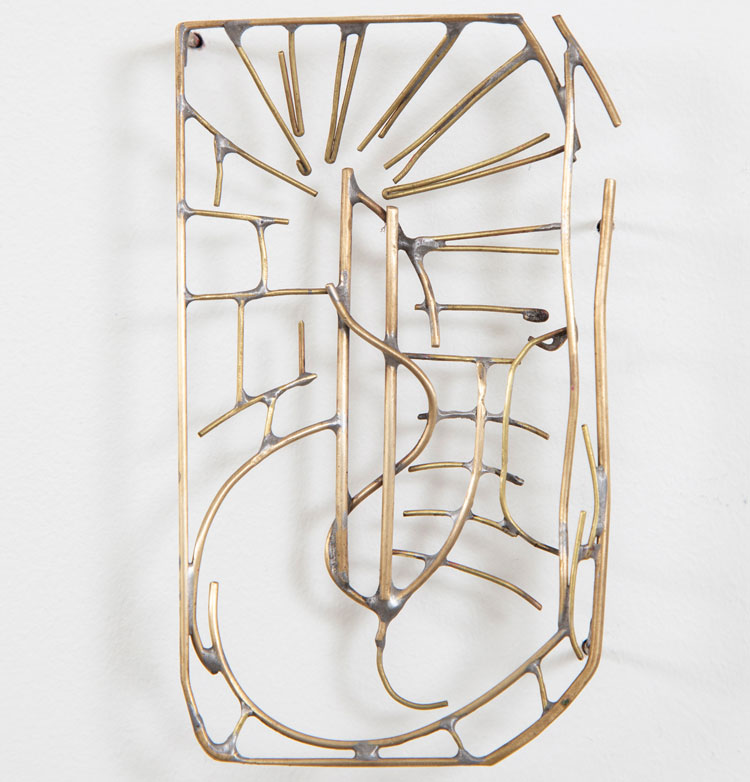
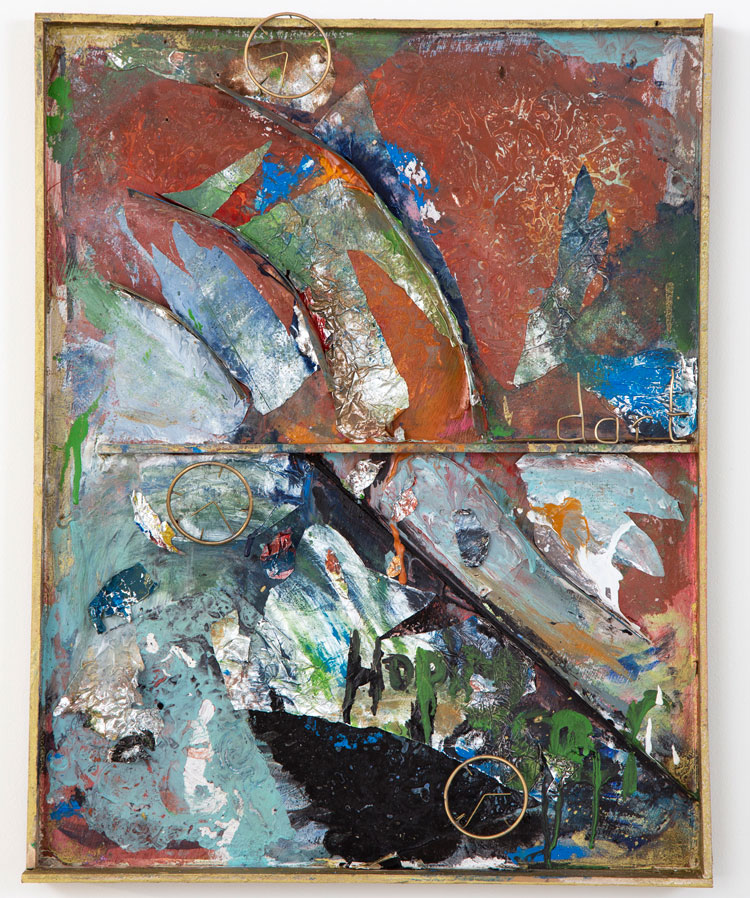
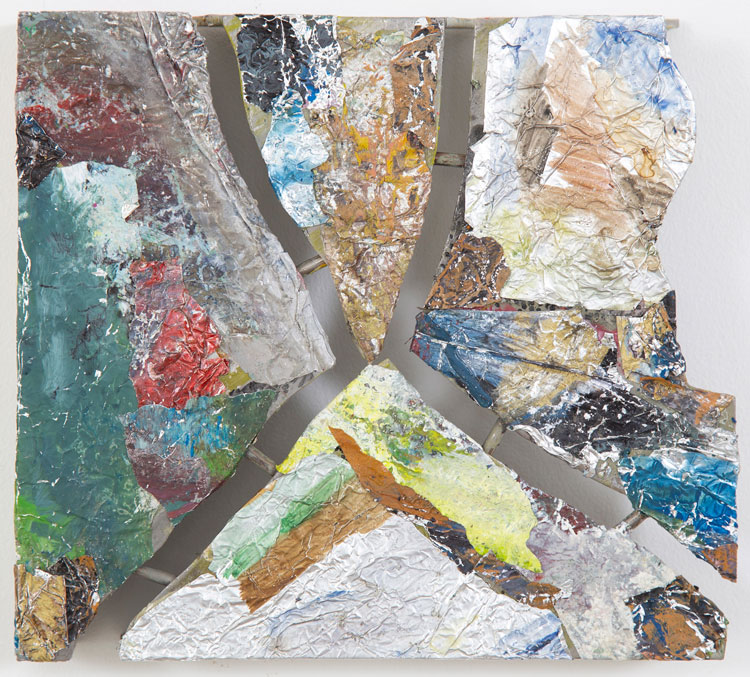
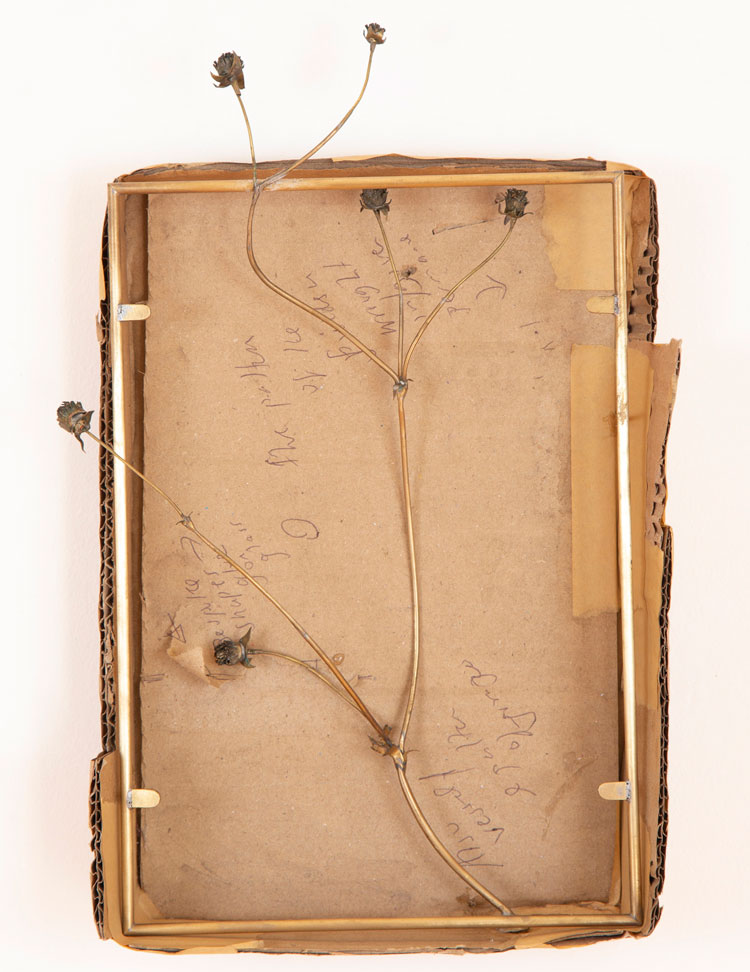
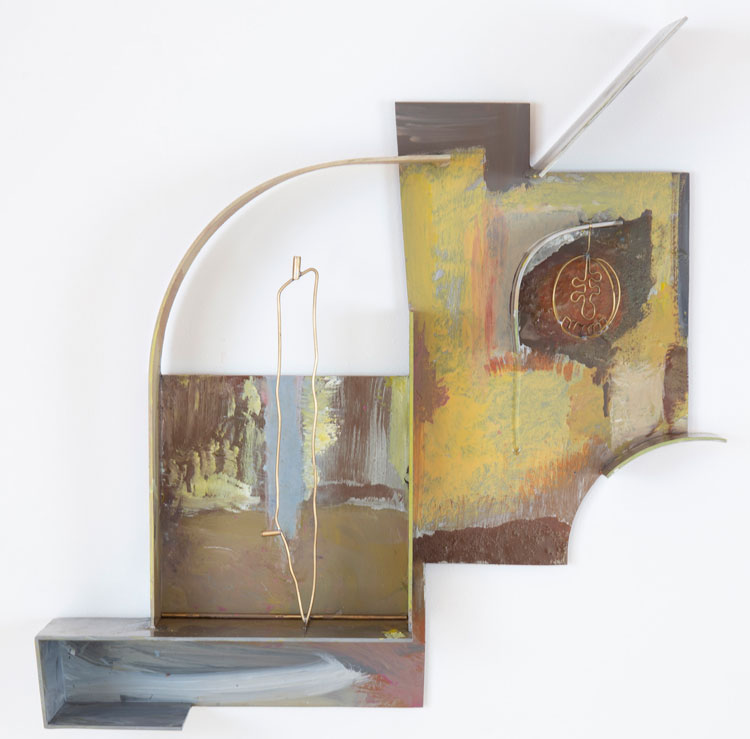
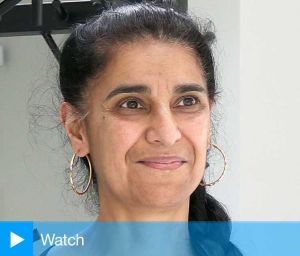
Sara Barker. climb, 2020. Brass metal work, 13 x 8 x 4 cm. Photo: Mike Bolam.Sara Barker talking to Studio International via Zoom, January 2020.Sara Barker. Dart, 2020. Plywood tray, brass rod, automotive paint, oil paint, tinfoil, 49 x 38 x 4.5 cm. Photo: Mike Bolam.Sara Barker. GAP, 2020. Stainless steel tray, stainless steel rod, automotive paint, oil paint, 45 x 55 x 6 cm. Photo: Mike Bolam.Sara Barker. Hairs, 2020. Stainless steel tray, stainless steel rod, automotive paint, oil paint, varnish, 38 x 40 x 8.5 cm. Photo: Mike Bolam.Sara Barker. Split, 2020. Stainless steel tray, stainless steel rod, automotive paint, oil paint, tinfoil, 20 x 20 x 5 cm. Photo: Mike Bolam.Sara Barker. Will, 2020. Stainless steel tray, stainless steel rod, automotive paint, oil paint, varnish, 54 x 44 x 17 cm. Photo: Mike Bolam.Sara Barker. hold, 2020. Cardboard tray, brass rod, pencil, varnish, 28 x 20 x 6 cm. Photo: Mike Bolam.Sara Barker. mouth, 2020. Stainless steel tray, brass rod, automotive paint, oil paint, 38 x 40 x 8.5 cm. Photo: Mike Bolam.Sara Barker. reason, 2020. Plywood tray, brass rod and sheet, gouache, oil paint, perspex, tinfoil, 33.5 x 40 x 6.5 cm. Photo: Mike Bolam.Sara Barker: undo the knot, installation view, CAMPLE LINE, Cample Mill, Scotland. Photo: Mike Bolam.Sara Barker: undo the knot, installation view, CAMPLE LINE, Cample Mill, Scotland. Photo: Mike Bolam.Sara Barker: undo the knot, installation view, CAMPLE LINE, Cample Mill, Scotland. Photo: Mike Bolam.Sara Barker: undo the knot, installation view, CAMPLE LINE, Cample Mill, Scotland. Photo: Mike Bolam.
The Argentinian-born artist explains how chairs, daisy chains and bunting feed into her exploration of early years education, history, rituals, community and conflict resolution
Her quietly reflective films and photographs, with their evocative use of colour and light, are things of beauty, but their true depth and meaning are only revealed on slow looking
The calm and welcoming spaces at this Scottish gallery provide the perfect setting for Winstanley’s vibrant and joyous paintings and Mace’s painted wooden sculptures
Reflecting on violence, particularly against women and minorities, Farhoudnia’s paintings force us to see that the stories depicted in her works concern all of us and that we should not take freedom of choice for granted