Interviews
-
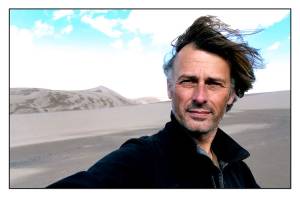
Toby Deveson – interview: ‘There is definitely a sense of seeking perfection, seeking that world, that place to the west of the sun’
The photographer talks about his love of landscapes, his instinctive composition, and that elusive somewhere you can never reach
-
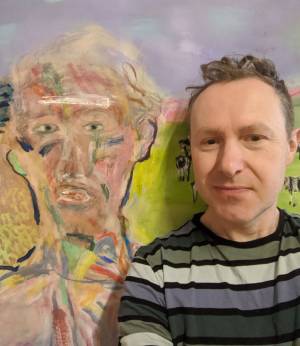
Andrew Litten – interview: ‘I like the feeling that my work is emotionally varied and full of raw nerves’
The artist talks about his concern with expressing human vulnerability and encouraging empathy and connection
-
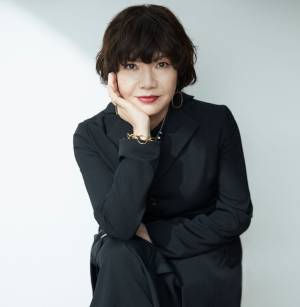
Mami Kataoka – interview: ‘We need to look at long-term museum management because this situation will linger’
The director of the Mori Art Museum in Tokyo explains how it has used its online presence and social media during the Covid-19 pandemic, and considers how this will shape the future of exhibitions and the funding of museums
-
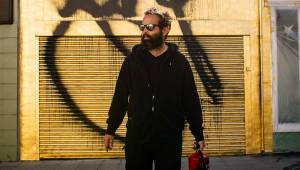
Stefan Brüggemann – interview: ‘The language in the work adapts to the consciousness of the public’
The artist explains why he has painted a building in Folkestone in gold leaf and scrawled OK across it and talks about his forthcoming show of gold paintings done during lockdown, a period that spurred him on to great creativity
-
Esther Teichmann: ‘My work explores our relationship to the maternal, thinking about the mother as first lover’
The artist talks about the inspiration of watery places, lockdown at her parents’ home and how motherhood has changed her as an artist
-
David Blandy – interview: ‘The online world can be a space for transformation, a place for better understanding our offline existence’
Blandy talks about his new films, produced during lockdown and made to be viewed at home, his use of video games to produce art, and how his works, which deal with cultural appropriation, postcolonial legacies and racism, have turned out…
-
Yuko Hasegawa – interview: ‘We built Olafur Eliasson’s exhibition without the artist’
The artistic director at the Museum of Contemporary Art in Tokyo was preparing a solo exhibition of Eliasson’s work when the museum shut because of Covid-19. She explains how a printed catalogue and an online talk saved the day
-
Ann Thomson – interview: ‘Art is a means of renewing culture’
Now in her late-80s, the Australian artist discusses how her love of Aboriginal art was sparked as a child, being influenced by the Scottish-born artist Ian Fairweather along with American, French and Chinese art, and being compared to Cy Twombly
-
Hetain Patel – interview: ‘What does it do growing up to see that the only heroic version of masculinity I can be is white’
Known for performance art that mixes superheroes such as Spider-Man with the Gujarati traditions of his family, Patel explains why Eddie Murphy and The Simpsons influence him more than the arts and why he struggles to be seen as a…
-
Clae Eastgate – interview: ‘I want my portraiture to be that bridge, that in-between being, between a genre painting and a traditional portrait of someone’s face’
The artist talks about her project Painting the Poets, comprising a growing collection of portraits of female poets, which she hopes to exhibit to provide a platform for, and raise awareness of, the importance of women’s voices
-
Matthew Burrows – interview: ‘I think as an artist and I make as a painter’
The artist talks about his strategies for thinking about painting, how his long-distance running is integral to his work, and the unexpectedly huge success of his #ArtistSupportPledge idea
-
David Downes – interview: ‘Through the adversity, I thought this is something I’ve got to get down on paper’
The artist talks about his project of documenting the Covid-19 pandemic and how his autism feeds into his work
-
Studio Morison – interview: ‘MOTHER … was made to heal us now, to prepare us for the future. We are now in that future, and she can help us still’
The artists talk about their site-specific, timber and straw commission, MOTHER …, for Wicken Fen, Cambridgeshire, which offers visitors somewhere to sit and shelter and escape from their own heads
-
Tom de Freston – interview: ‘Painting by its very nature is an act of mourning’
For an artist whose work is bound up with trauma and who suffered the devastating loss of 12 years’ work in a fire earlier this year, De Freston remains remarkably upbeat
-
Mark Titchner – interview: ‘Language is how we relate to the world, there’s no separation’
His text-based work Please Believe These Days Will Pass has formed a key part of the UK’s early lockdown landscape. Here, he talks about his process and the power of language – its ambiguity as well as our collective understanding…
-
Lonnie Holley – interview: ‘I started doing my work with a knife, fork and a spoon on sandstone’
Following a traumatic childhood, his art saved him, says Holley. Here he talks about the environment, the coronavirus – and why he’d love a Lonnie Holley museum near a landfill site
-
Ken Done – interview: ‘We white blokes could learn from collaboration in Aboriginal art’
Now 80, Done says you should be fearless as you age and take more risks. Here he talks about why a good work is like a long-term relationship, collaborating on art with his grandchildren – and swimming with sharks
-
Robert Fitzmaurice – interview: ‘I started to truncate the figure a lot more, take liberties with it, and add extra limbs’
The artist talks about the work in his latest show, now postponed, his interests and influences – and how he is coping with lockdown
-
Hilarie Mais – interview: ‘I draw what I am working on as a way of understanding and observing the work’
The artist talks about her abstract constructions, which lie partway between painting and sculpture, and how her art was shaped by life in New York in the 1970s followed by her move to Australia nearly 40 years ago
-
The effects of Covid-19 on Italian museums: interviews with the directors of the Accademia Carrara, the Uffizi and the Peggy Guggenheim Collection
As Italy tentatively enters a less restrictive phase of Europe’s longest lockdown, the leaders of three prominent art institutions consider the immediate effects and longer-term implications of a global calamity
-
Alexandra Daisy Ginsberg – interview: ‘We need to radically rethink our behaviours, globally’
The coronavirus pandemic is a chance for people to ask how they can do better by nature, says Ginsberg, who talks about her work using artificial intelligence and technology
-
Helen Cammock – interview: ‘Creativity requires a space of idleness, of being still’
Last year’s Turner Prize-winner talks about the inspiration behind her latest film and text installation, different understandings of idleness, the role that writing plays in her practice and how her time as a social worker feeds into her art
-
Janet Laurence – interview: ‘White Australians didn’t have a way of seeing our landscape’
A leading contemporary artist in Australia, Laurence talks about colonialisation and using her art to address the fragility of nature and climate change
-
Marguerite Humeau – interview : ‘I think art was born from a will to become eternal, to leave a permanent trace’
Whether she is reconstructing the voice of Cleopatra or creating futuristic elephantine forms, Humeau is, she says, preoccupied with death