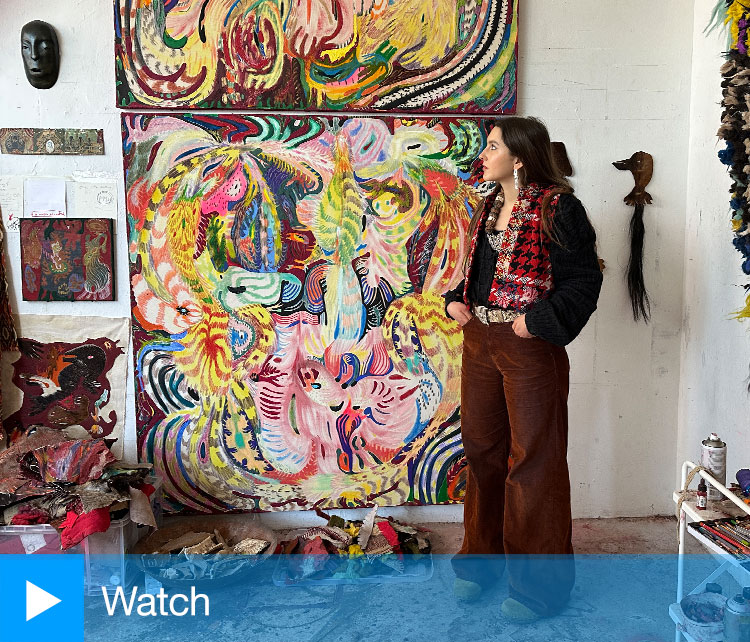
Toma explains her interest in collective and interspecies perspectives, her dynamic process, and her quest to unearth the stories hidden in organic and industrial fabrics
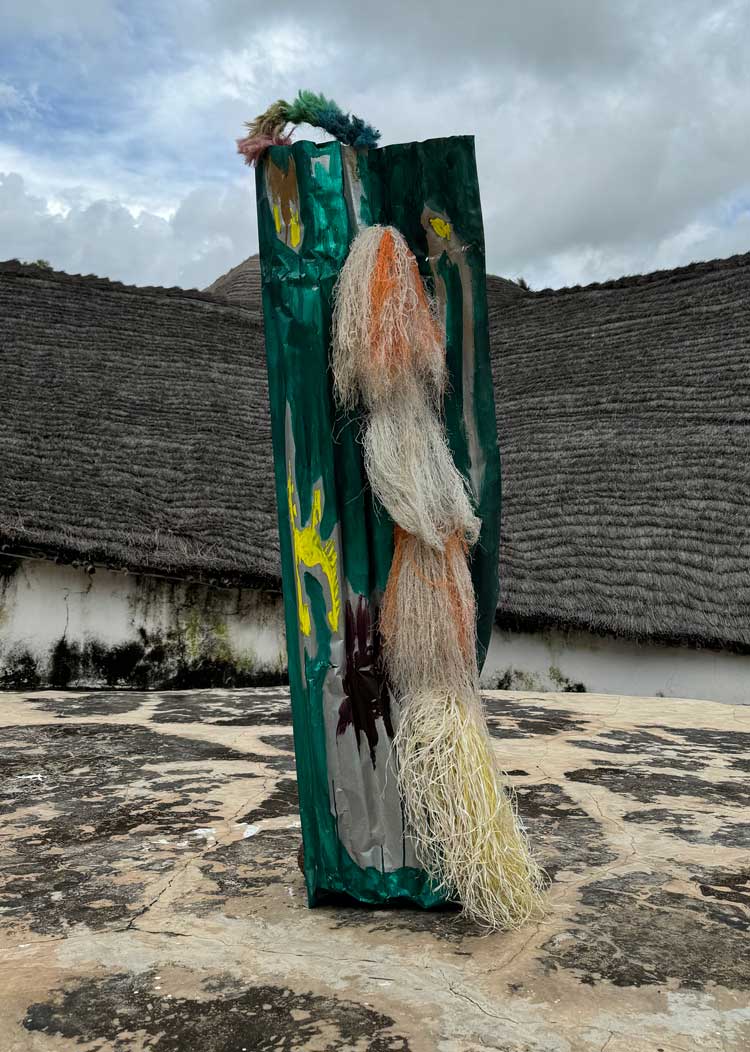
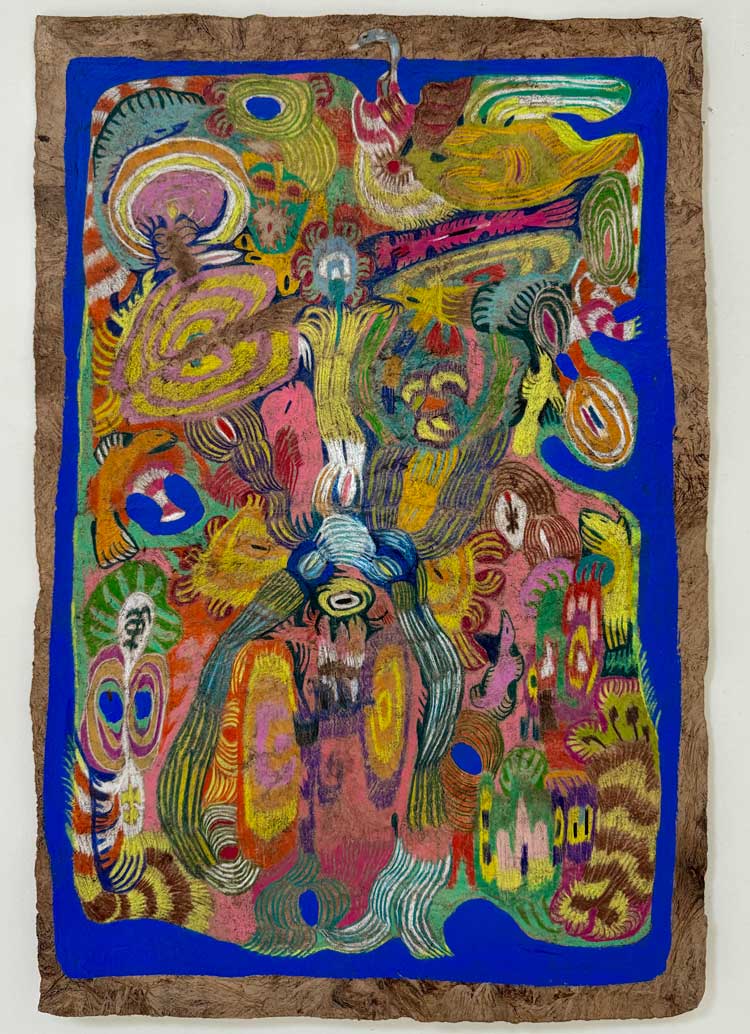
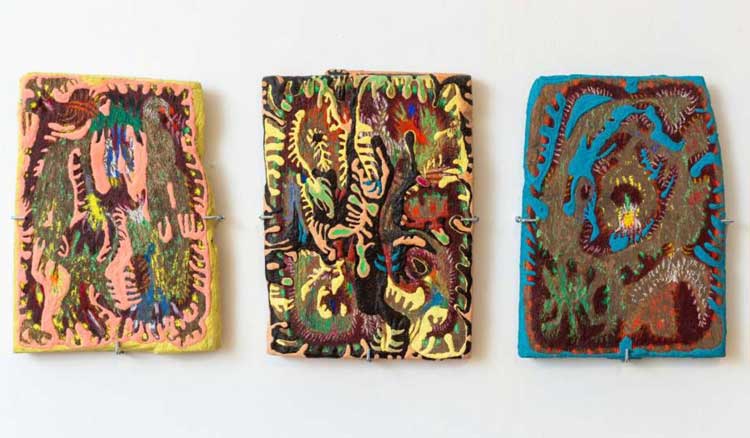
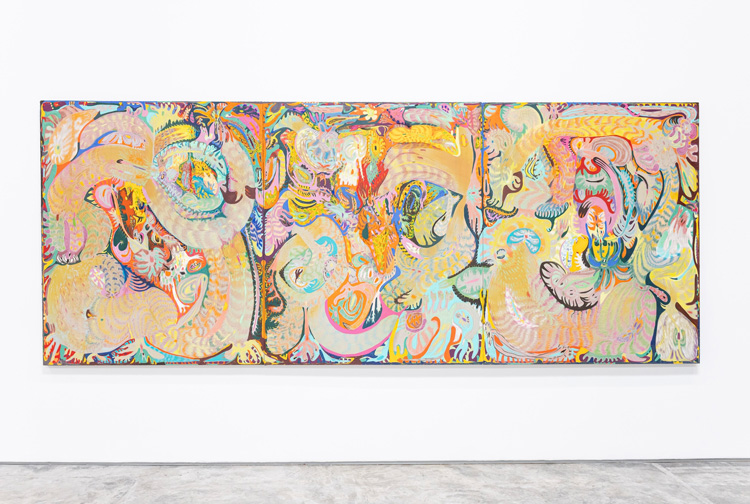
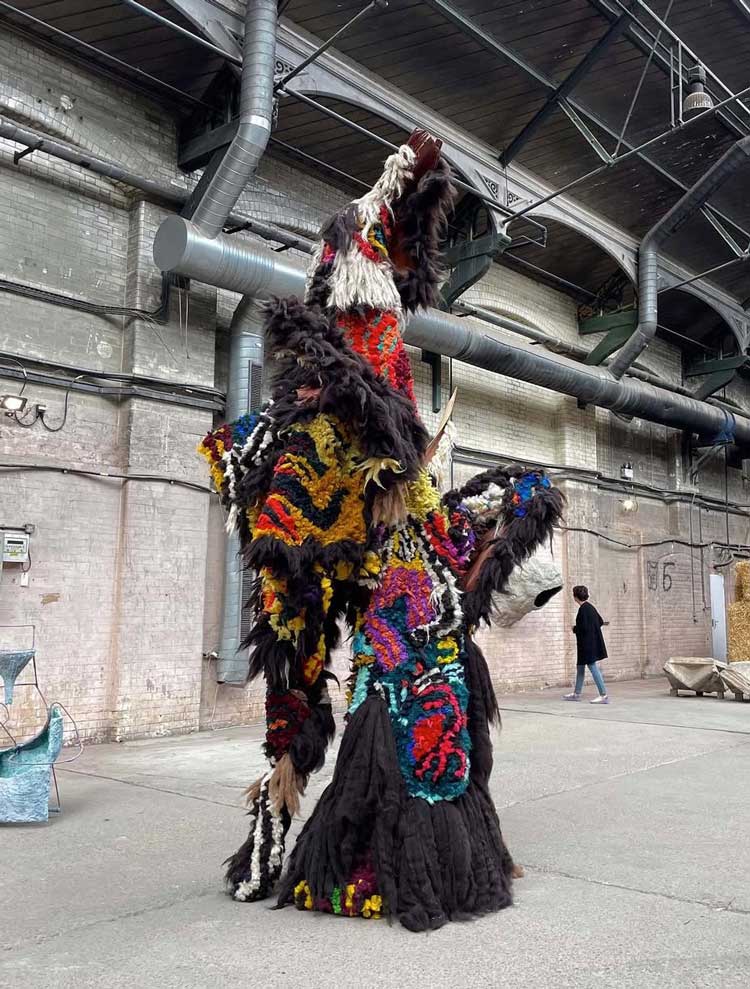
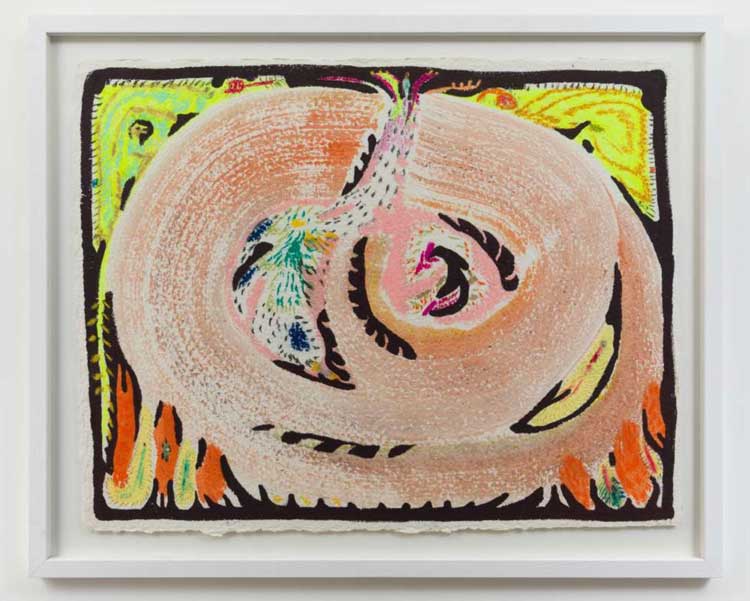
What better antidote to the British winter than to step inside the colourful studio of Melania Toma? Born in Padova in 1996 and based in London, Toma is interested in post-human philosophies that question human dominance in the Anthropocene. Believing in the “agency of materials”, she lets the material determine the shape of the works, which are often hybrids between painting, sculpture and textile.
In Toma’s wildly imaginative worlds, there are no hierarchies: elements of plants, animals and other organic matter coexist; personal narratives interweave with mythological references, and everything is pulsating with a palpable energy. Symbolic forms recur, always hovering on the familiar and the unsettling. Central to Toma’s practice is the idea of “the cell as a political and poetic site, where transmission, regeneration and contamination happen, and where larger ecological and social revolutions quietly begin”.
Travel inspires Toma for its ability to enable you to see the world from a different perspective, and she recently completed the Girlpower residency in the South of France, as well as residencies at Casa Wabi in Oaxaca, Mexico, and at the Josef and Anni Albers Foundation Thread in Senegal.
Interview by SABINE CASPARIE Filmed and edited by MARTIN KENNEDY
This intimate biography draws on the author’s friendship with Anni and her husband, Josef Albers, and is a wonderful addition to the legacy of her life and work
This book shows how Anni Albers and Trude Guermonprez, teaching at a small arts college for just a few years in the early 20th century, had a lasting effect on the theory and practice of the craft
Woodbury talks about her solo show at HackelBury Fine Art and what led her to use old books to redraw the history of art and make the invisible visible
The coronavirus pandemic is a chance for people to ask how they can do better by nature, says Ginsberg, who talks about her work using artificial intelligence and technology
One hundred years since the founding of the Bauhaus school, this exhibition considers how it influenced the UK’s cultural scene, from film to music and performance art to hairstyles